
How has social media turned the desire for love into the need for validation?
- Why has visibility become the new proof of love?
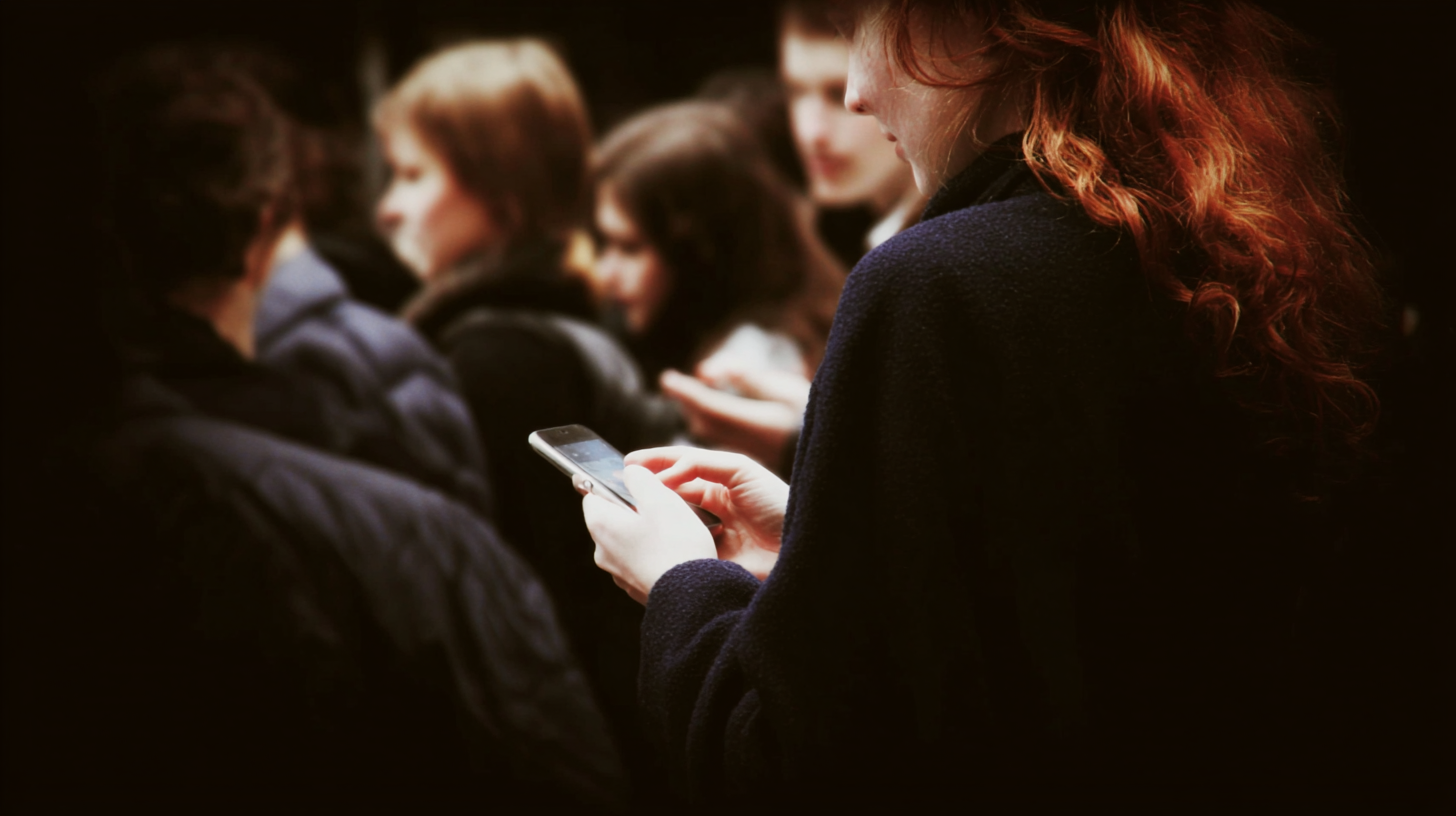
In the age of social media, continuous exposure, mirror selfies, and public confessions, existence itself no longer carries weight without the gaze of others. We no longer live for ourselves, but for an audience. We no longer feel silent, but declaratively, as if every emotion should be validated by visible reactions.
And this subtle translation from interiority to spectacle creates a clear distance between those who need to show themselves to feel that they exist and those who refuse this logic, who remain rooted in their own inner space, inexpressible in video format and short text. For some, life is a stage; for others, it is a private silence. Not a “private profile”, but an existential choice: that of not living one’s reality in full view of the world, but of keeping meaning in a secluded, personal space, sometimes inaccessible even to those close to them.
2. How has the search for validation on social media reshaped the way we express love and vulnerability?
More and more people are learning, without knowing it, their affective language from social networks, where selective exposure and continuous self-remembering become norms of existence. Photos from the past, texts written in moments of vulnerability, diary captures, or experiences loaded with emotional drama are posted not only as gestures of authenticity, but also as subtle acts of justification: “Look what I’m experiencing, how beautiful, intelligent, talented, happy, or sad I am. I deserve to be loved”.
When these people meet a potential romantic partner, the behaviour learned in the public space is brought, mechanically, into the intimate space. Instead of the closeness growing organically, in their rhythms and mutual observation, it is rushed through affective presentations, as if everyone had to make their existential file complete, with archives of pain and qualities. And these gestures, although emotionally charged, carry a tension in them: they not only say “look who I am”, but also “love me for everything you see here”. It is a type of crying fragility that requires a reaction.
But not all people know or want to love by reacting. Some get closer slowly, through presence, consistently. And for them, the gestures of the other can seem overwhelming, forced, too full of intention. Not out of a lack of empathy, but out of another inner construction. And then, between these two people, a conflict is born that is difficult to name, but which slowly erodes the connection.
3. Is openness always authentic or can vulnerability itself become a subtle form of self-promotion?
In an age where intimacy has become content and confession a public act, openness seems a form of authenticity. But behind this openness, there can be hidden a subtle mise-en-scène, an affective scenario written for the gaze of the other.
It is difficult to distinguish, in contemporary confessional discourse, between real vulnerability, that profound gesture of exposing oneself without the promise of an answer, and emotional exposure, meant to create the impression of depth. Recounting a trauma, posting a photo in which they cry, sending diary pages to a barely known person is no longer always an act of trust, but sometimes a strategy of seduction. Not a banal one, but a subtle, refined one, which uses the language of suffering to convince of one’s value.
“I suffered, so I deserve to be loved.” It is one of the hardest truths of our time to name: that suffering has become a bargaining chip, a symbol of depth, a guarantee that life has been lived intensely and therefore must be honoured. But when suffering is delivered as a portfolio and not as a trust, when intimacy is shown without being offered, something problematic arises: not in the content, but in the intention.
4. Why does social media promise connection but deliver only visibility and emotional competition?

The online space is no longer a simple medium of communication, but a global stage on which human beings play out their legitimacy. We no longer share from the overflow, but from lack, not from closeness, but from the desire for closeness. Sharing one’s personal life thus becomes ambiguous, oscillating between a discreet call and a desperate cry. Some post to be found by the chosen one, but find themselves followed by too many. It is a disturbing paradox: the more we show ourselves, the more invisible we become, absorbed in an indistinct mass of similar confessions, images, and stories.
Social media promises connection but only provides visibility; it promises belonging but creates a collective sense of aesthetic and emotional competition. We delude ourselves that if we are seen by many, we will be loved by someone. But love does not work as an algorithm; it is not distributed, optimized, or monetized. It requires presence, not public. Privacy, not reach.
And the person who is looking for a single soul, not a community, soon discovers that social platforms are structured exactly the opposite of their need. They offer witnesses, but not relevant ones; attention, but not involvement; reactions, but no response. In a world where belonging has been replaced by exposure, and connection has been replaced by pursuit. The one who does not want to play on this stage, but only to exist in this world, inevitably remains outside the show.
5. What kind of solitude awaits those who refuse to turn intimacy into a public performance?
It is precisely this pressure to always be present in the eyes of others that undermines the possibility of being truly present in front of one person. Not because people no longer have the ability to love, but because they no longer know how to do it in the absence of online evidence.
Discretion is no longer a form of security, but of suspicion. And yet, there is a special silence in those who do not live their intimacy as a product, who do not extract their value from applause, but from a form of inner congruence that is difficult to explain. These people do not shout, they do not offer themselves, they do not compete. They just are there and waiting. They cannot betray their instinct, transform what is alive in them into an image, or replace touch with reactions. And so, instead of being found, they become invisible.
Leave a Reply